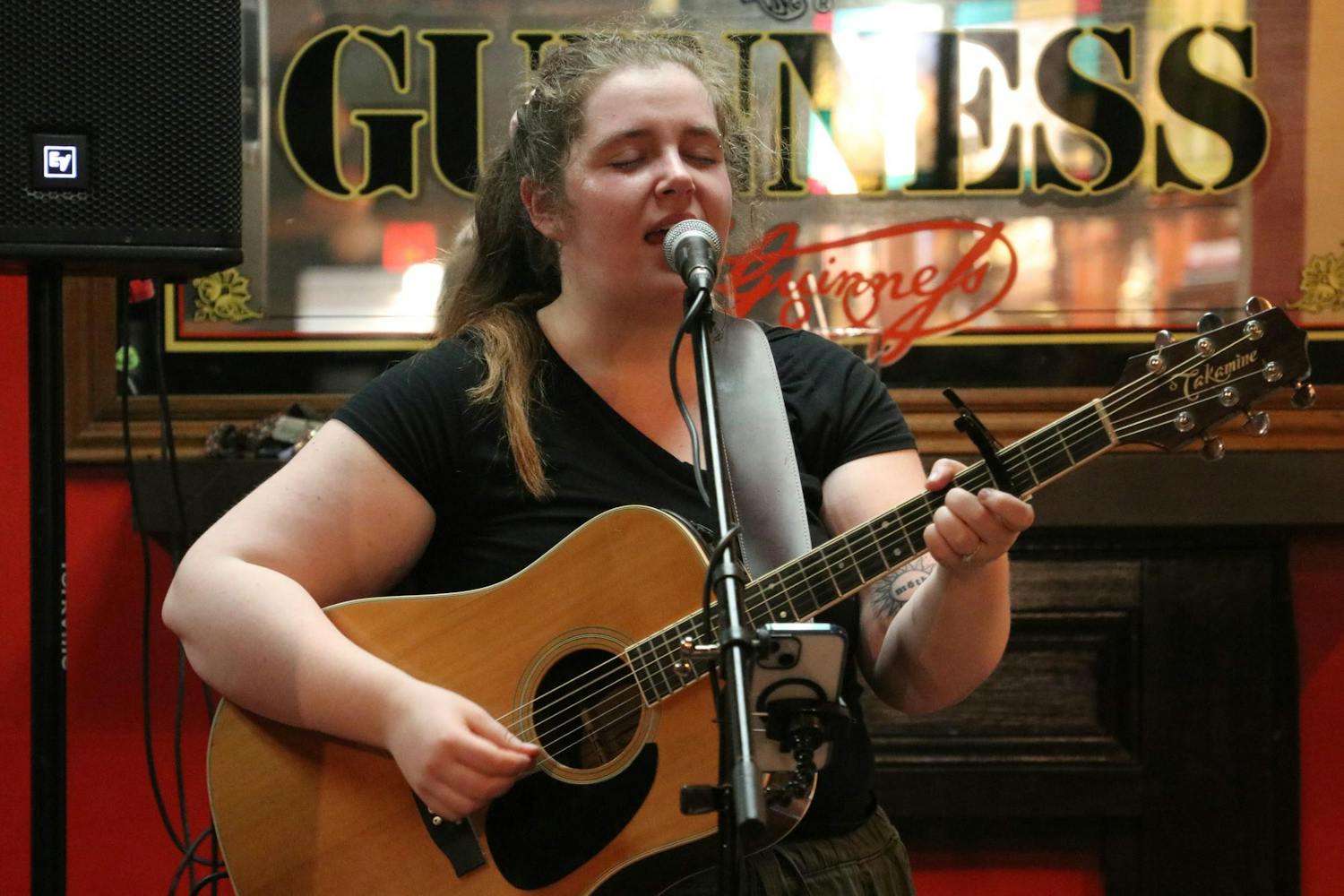
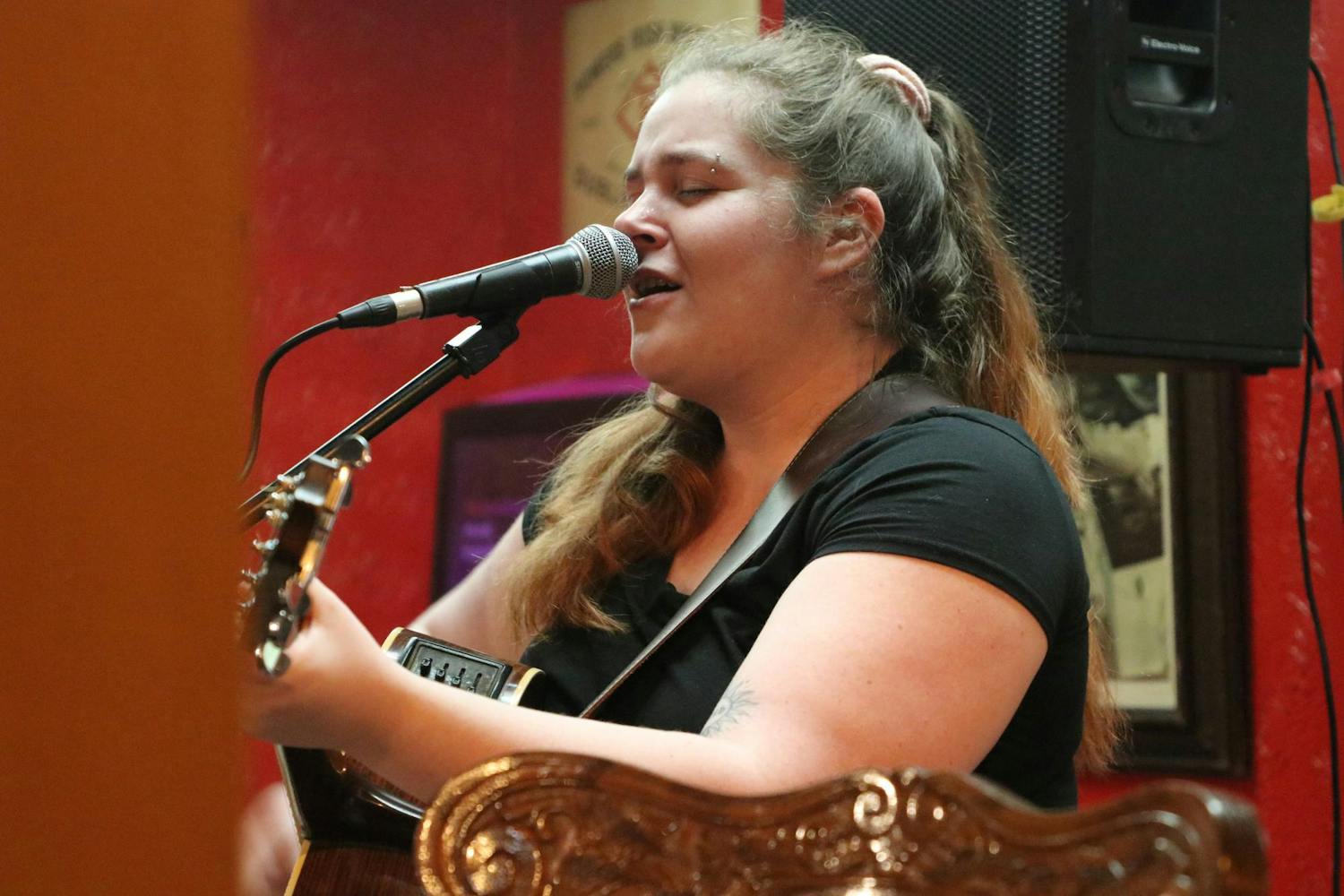
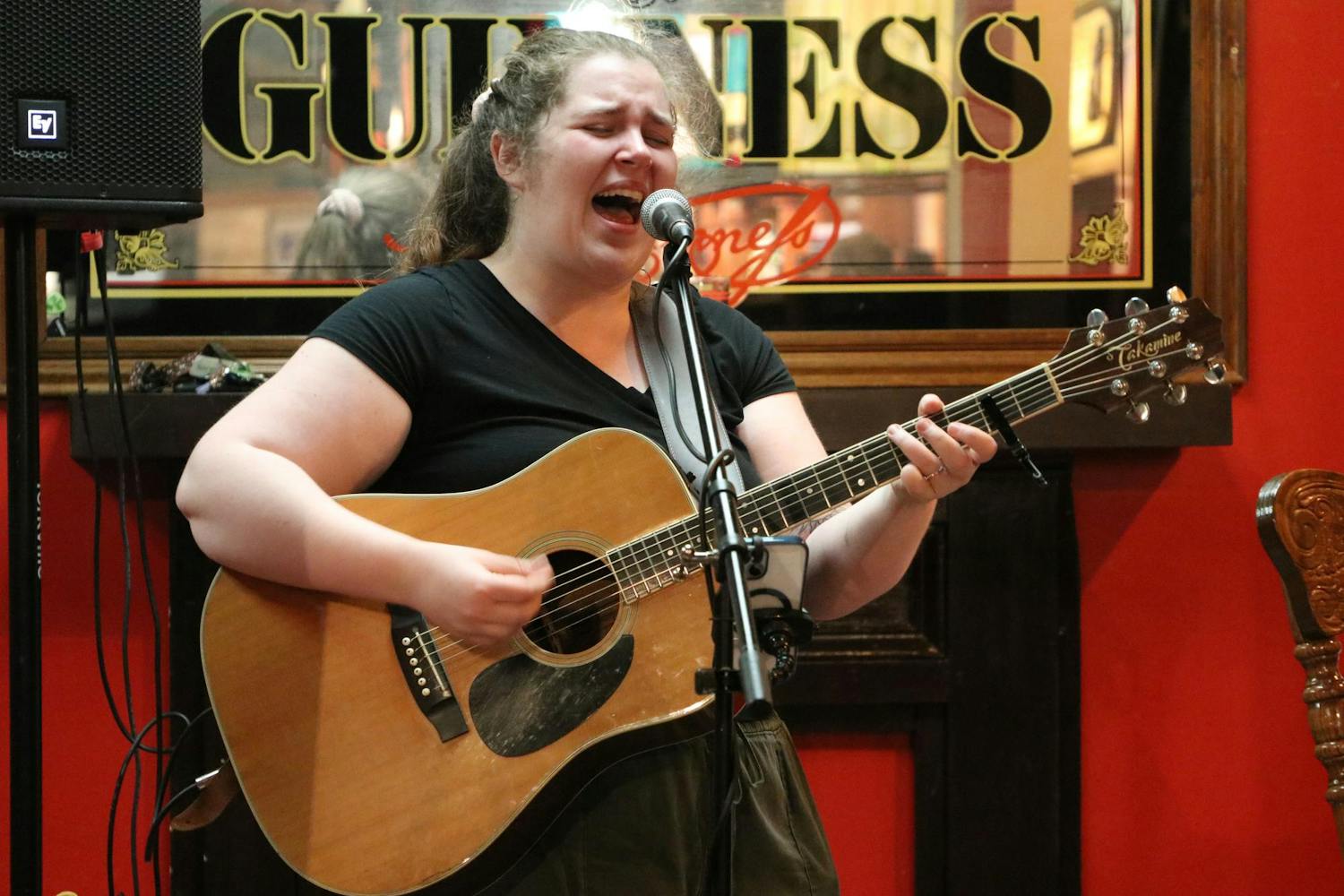
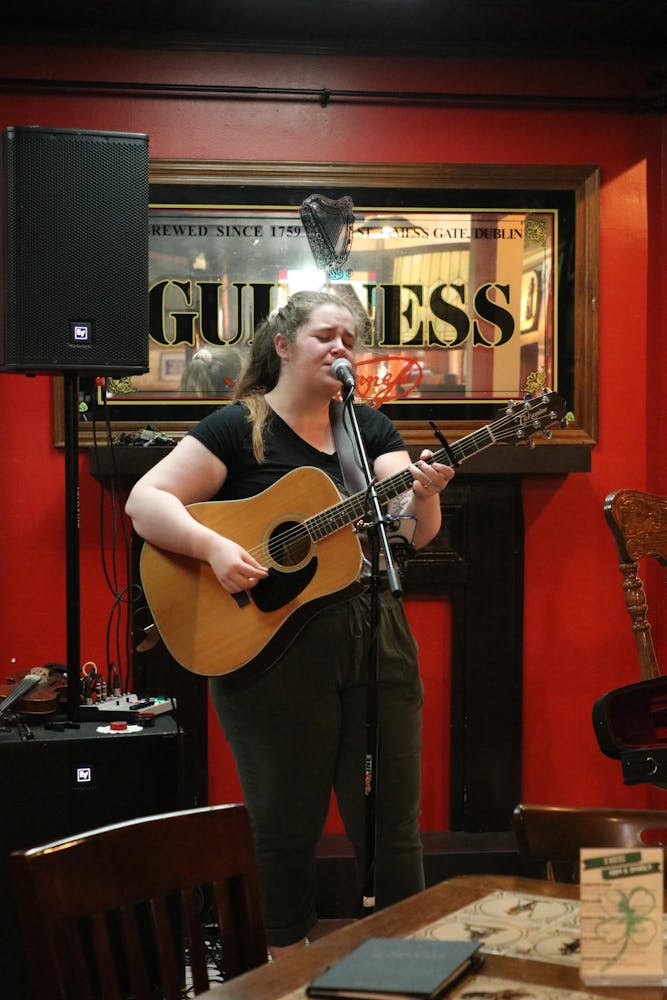
At local pubs like O’Huids in Lancaster, people settle into their seats with a drink in hand to listen to the enchanting sound of the guitar and fiddle transporting them across the pond to the misty hills of Ireland. Molly Róisín is their tour guide.
Originally from Eastlake, Ohio, and currently based in Westerville, Róisín is a multifaceted artist and educator. Known as “Columbus Irish music’s second string,” she regularly plays with other local bands alongside her own band and solo shows. The songs she performs range from Irish rebel songs to American folk, but they all share common themes: “boats, poor people and a particular distaste for imperialism.”
Róisín gracefully intertwines the lilting folk sound with a surprise Irish history lesson. Ireland is the only country with a musical instrument – the harp – as its national symbol. This dates back to when the English occupation banned Irish music and burned their harps in the 17th century. Suddenly, the culture of an entire people was outlawed.
That did not stop the resilient Irish folk. Instead of submitting and staying quiet, they developed different methods of expressing themselves in the midst of centuries of English oppression. Some of these include céilí dancing and singing methods like lilting. Traditional Irish folk songs have a rich history of rebelling against their oppressors, no matter the consequences.
Róisín’s father, who is rumored to be distantly related to former Irish Republican Army leader John Kelly, came to the U.S. from Ireland and brought rebel music with him. He has been singing for over 35 years, and he cultivated that same love of music in Róisín by teaching her the guitar when she was just 5 years old. Her first performance was at age six.
“Most kids learn ‘the ABCs as their first song, or ‘Twinkle Twinkle, or ‘Row Row Row Your Boat.’ My first song was a rebel song,” said Roisin. That song is “The Boys of the Old Brigade,” which was written about the 1916 Easter Rising.
It was around the age of 12 that she first met Willow Bea Chalko, who would eventually become her good friend and bandmate. Chalko also started playing music from a young age, including the banjo, drums, and mandolin. She was in a six-piece punk Irish band in high school, and Róisín’s father took them under his wing. The age gap meant that Roisin was not immediately involved with Chalko and her band, but the seeds were sown for a lifelong connection.
Chalko’s band parted ways after high school, and Róisín went to Wittenberg University and graduated in 2022 with a degree in music education. On New Year’s Eve of 2021, she reconnected with Chalko and friends for a jam session, which was possible now that she was old enough to play shows in bars and venues. This rekindling led to Róisín’s move to Columbus, where she first lived with her friend’s sister while she found a job and continued to play music.
Róisín met Molly Brown at a job orientation, and they quickly became close friends in part because of their similar experiences: they are both named Molly, grew up in northeastern Ohio and are both classically trained musicians.
At the request of her terminally ill father, Brown started playing the piano at the age of five. Eventually, she learned to play anything and everything in school. During her time at Ohio State University, she played the French horn in their marching band and received her degree in music education.
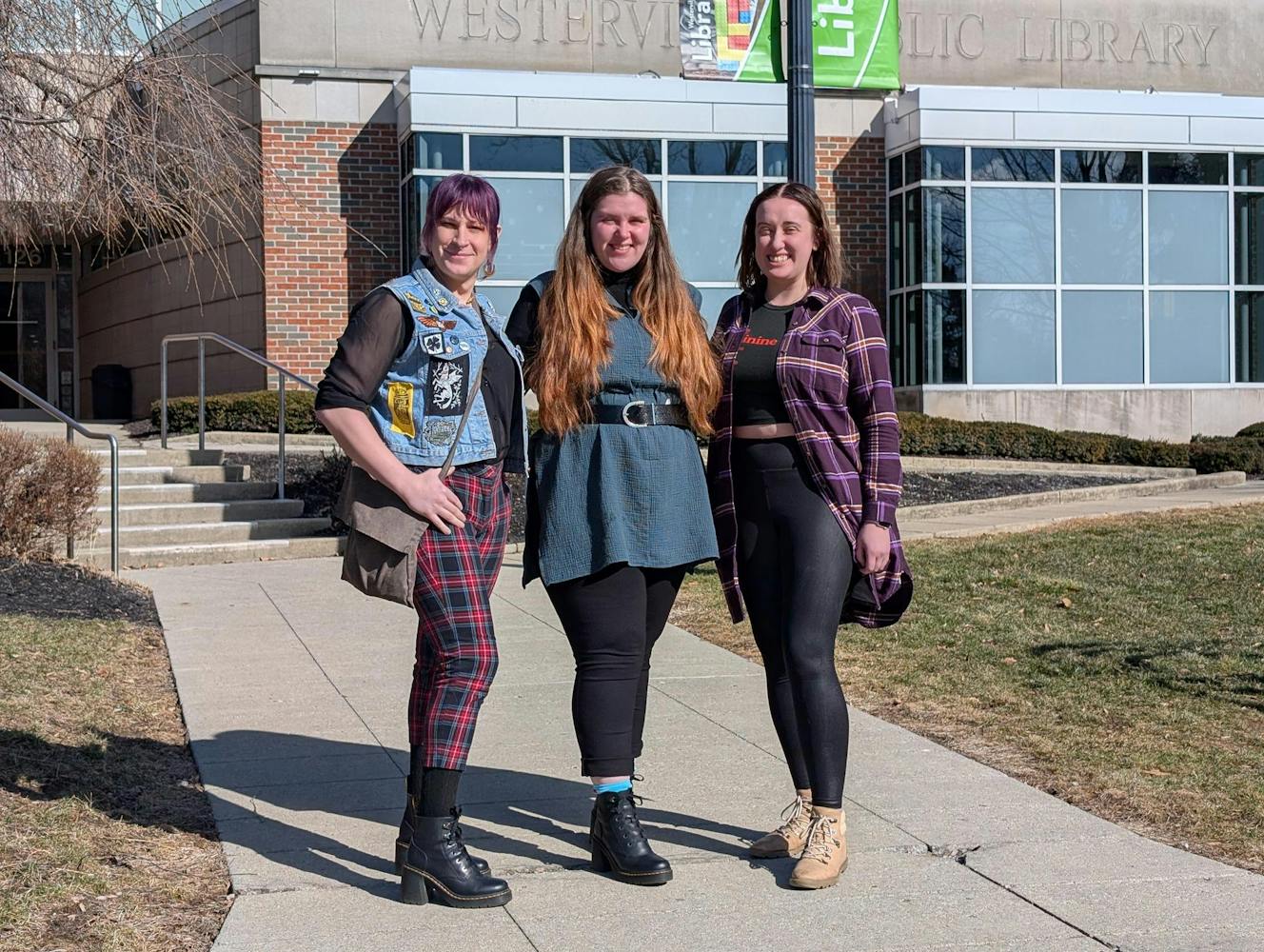
Brown always wanted to be in a band, so she eagerly accepted when Róisín asked Brown to join her and Chalko for a couple of St. Patrick’s Day shows after their other bandmate, Nick, moved away. The trio officially formed their band, The Willow Bea Mollys, in December 2023.
“I feel like the three of us all have our different, like individual scenes, but have kind of come together,” said Chalko. While all three of them have Irish heritage, Brown has learned a lot about Irish history and the traditional music scene from Róisín and Chalko. Róisín’s father gave presentations about Irish history alongside his music, and that is something the trio has carried on.
Róisín said she tries to provide context to these songs, particularly the catchy ones like “Black Velvet Band.” The song is the story of an Irish man who was framed and banished to a prison colony. She explained that even though the popular pub song gets people cheering, they may not care to listen to the meaning of the song.
“The songs are really catchy, but the reason that they’re catchy is so you remember the history,” said Róisín.
The trio has long been influenced by outlaws both historical and musical. Musical influences include Pete Seeger and Johnny Cash, whose music has similar themes of working class struggles and protest. Many of the heroes in traditional Irish rebel music are true historical rebels who fought against their British oppressors and were outlawed in society because of it.
“I like to push the envelope,” Róisín said. She has seen a lot of cognitive dissonance among her audience – people who enjoy her music yet voted for people who bust unions and are generally on the side of the oppressors. One of her goals is to find songs that will truly make her audience think about the story behind them and how it relates to what they see on the news today.
Currently, Róisín is focusing on her solo career while Brown is focusing on Harmony House, her music lessons business, and Chalko has temporarily stopped playing shows.
“I’ve taken a step back from performing pretty much since the election in November, strictly out of like the genre that we play, for the groups that we play, and because of my identity,” said Chalko. “I just want to be in a place where I can play music that I want to play without fear of judgment.” As a trans woman, Chalko has felt less comfortable playing at venues as political tensions increase alongside an uptick of legislation that targets LGBTQIA+ individuals.
“I’m not afraid of conversation. The whole reason I’m singing this song is to talk to you, but I don’t want to be hate crimed for it,” said Róisín.
Chalko said Columbus is a pretty good hub for protests and left-sided political movements, and Brown agreed, saying the community has shown that, even through some of her younger students whose families are active in protests.
Brown emphasized the importance of joy and self-care amidst staying informed and protesting. She mentioned gay protesters during the ’80s AIDS epidemic and how they buried their friends in the mornings, protested in the afternoons and danced at night. “Unless they allowed themselves to feel joy and goodness, there was no way they were going to make it or make any kind of a damn difference,” she said. “We take breaks from watching the news and we find things that we can love and hold on to, and still celebrate who we lost, and fight for not losing any more people, but to still make time for the other.”
Amidst the many social and political challenges of today, The Willow Bea Mollys are able to rely on each other for support, along with family and other mentors from the local music scene.
“Molly’s more on the track of making music a career than the two of us are, and so I would love Molly to have a solo album that we’re featured on and do some stuff, or even like do a song or two,” said Chalko.
Even though they do not have an album in the works, the trio maintains their close friendship and will eventually play more shows.