Small towns like Westerville face a unique challenge as they are witnesses to the political division between a large city and rural areas.
Both Westerville and Columbus leaned solidly democratic in the 2024 election, but the small-town environment can feel much less supportive than that of a large city.
“As I’ve been here for a few years, I’ve started to see the divide,” said junior acting major Naomi Eason, who is originally from California.
Eason said that some parts of Westerville feel very supportive of everyone, but that there are groups in town and at Otterbein who do not share that sentiment.
“It’s an odd experience to have both in the same classroom," Eason said.
Several Ohio laws targeting LGBTQ+ youth were passed within the year, including a ban on gender affirming care for transgender youth and a school bathroom ban. More recently, the 10th District Court of Appeals overturned House Bill 68, which included the ban on care for trans youth.
Meanwhile, the Westerville City Council has shown support for LGBTQ+ youth through a 5-2 vote in February to pass an ordinance banning the practice of conversion therapy on minors within city limits, making Westerville the 13th city in Ohio to do so.
The ordinance defines conversion therapy as “reparative therapy or any other practices by Mental health professionals which seek to change an individual's Gender expression, Gender identity, or Sexual orientation other than that with which the individual personally identifies.”
Methods of conversion therapy can range from talk therapy or hypnosis to exorcism, the use of drugs or painful electric shocks, just to name a few. Conversion therapy is subject to various ethical issues. The American Psychological Association, for instance, has criticized conversion therapy because such efforts may force people to hide their identity, potentially leading to mental health problems like low self-esteem, depression and suicide.
While policies at the state and local level contradict one another between granting or restricting the rights of LGBTQIA+ individuals, there is a strong community of support at Otterbein.
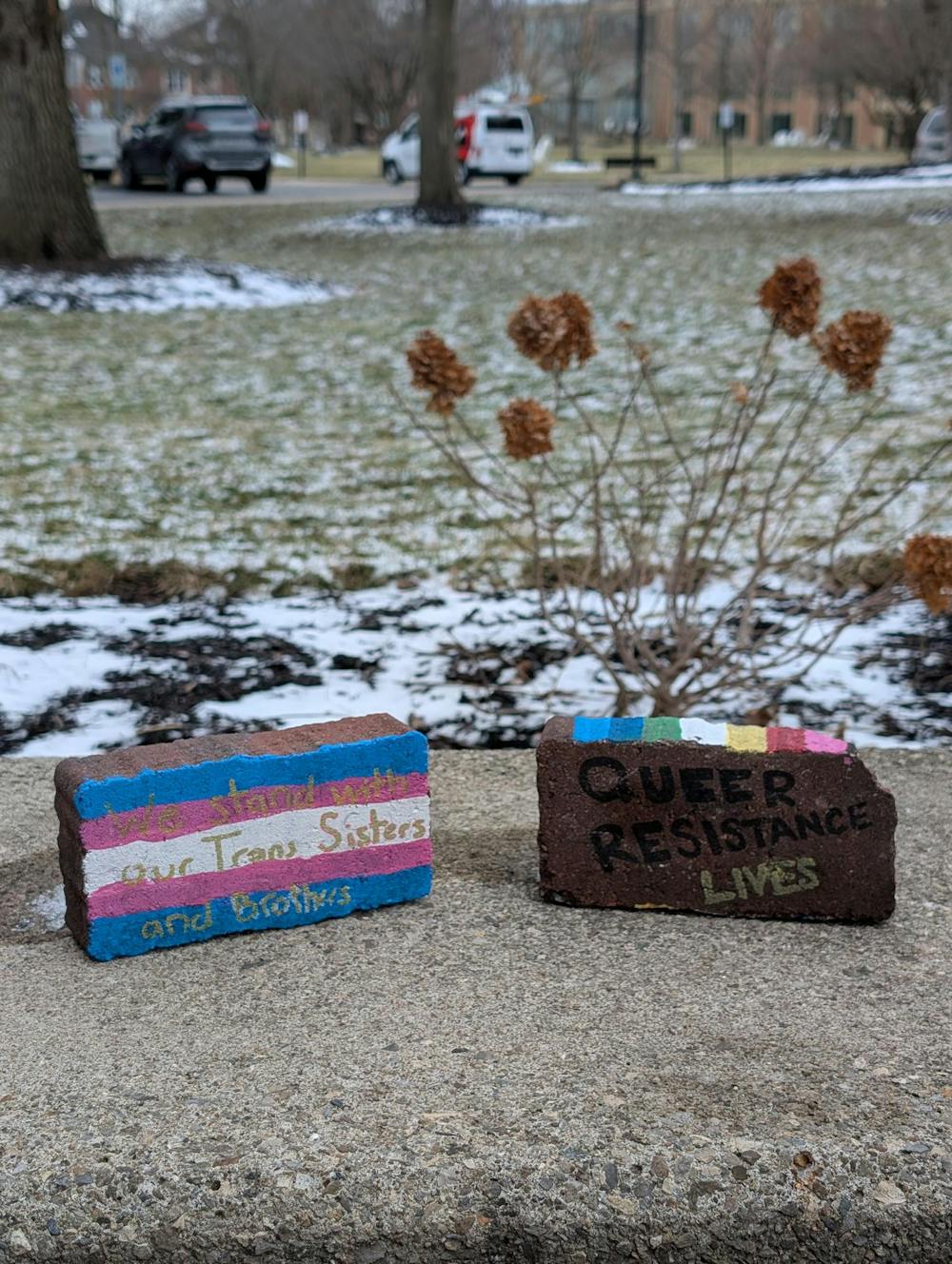
Brightly painted bricks have popped up all over campus. They speak in silent protest, saying “We stand with our trans sisters and brothers,” and “Queer resistance lives.” Bricks are an important symbol in LGBTQIA+ history, as they are said to have been thrown at the first Stonewall riot.
“I think that we have a very unique compassion for all these cultural and different backgrounds,” said Kit McCall-Crum, a junior sociology major and member of Otterbein’s Pluralism Collective. “I think that's incredibly important, especially because there are not a lot of institutions like that.”
Rev. Lucy Kelly, Otterbein’s director of faith and spiritual life, recalled speaking to a freshman student at the Church of the Master’s weekly coffee ministry this year. They told her that they chose Otterbein because of the church with the rainbow sign – an example of what Kelly says is “love speaking loudly.”
The theater department wrapped up its production of "The Laramie Project” on March 1. The play tells the story of Matthew Shepard, a gay college student who was brutally murdered because of his sexuality. It explores how the people of the small Wyoming town of Laramie responded to the crime and how their “live and let live” mentality allowed it to happen.
At a campus panel discussion, junior acting major Sammi Robinson said she was the assistant director for Westerville South High School’s production of “The Laramie Project” five years ago. This year, she was informed by her old theater director that Westerville South students would not be allowed to attend Otterbein’s matinee performance because of legislation restricting exposure to LGBTQIA+ topics.
“I have lived in a time in which I was allowed to do ‘The Laramie Project’ on stage, see its impact, see the way that it benefits people, and also see it taken away from others,” said Robinson.
Jessie Glover, the director of this year's production, recognizes its relevance to the present day.
“The piece is a message in a bottle from the past about a particular event … and the death of a specific person, but clearly resonates out to where we are right now as a culture and a society – problems that we are still reckoning with,” Glover said.