All of the critical and non-critical health violations found in a previous inspection of the Nest have been fully resolved by Otterbein University.
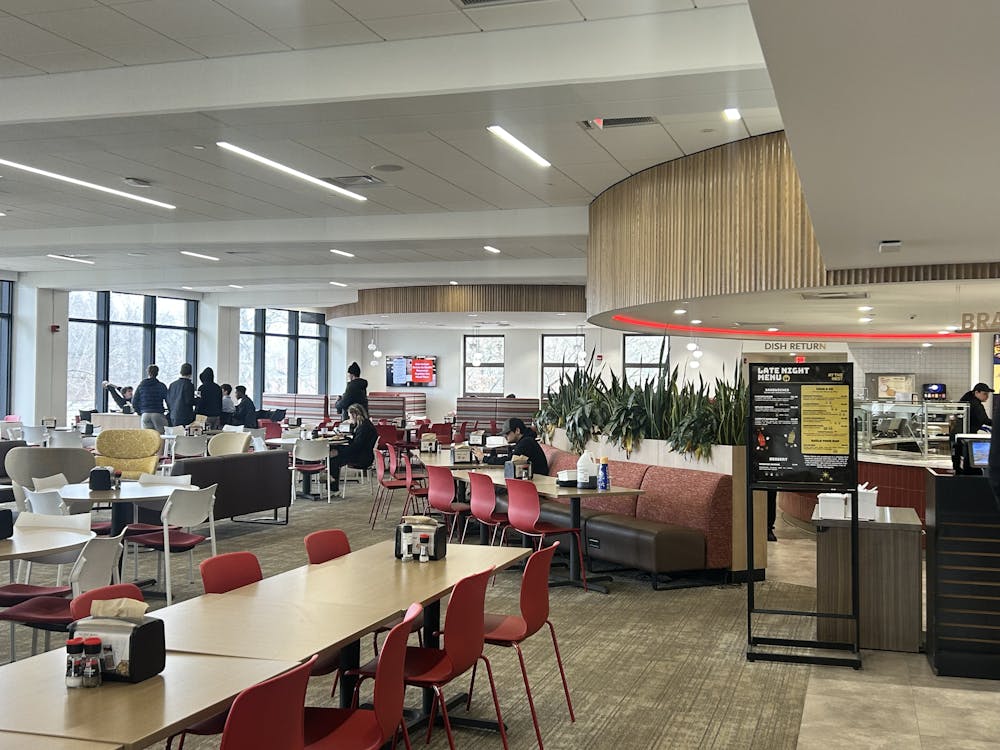
Otterbein’s campus dining center underwent major reconstruction last year, with the purpose of better meeting students’ needs and providing a more comfortable space for students to dine in. Much of the inspiration for these changes came from student input and requests.
On Jan. 28, 2025, during the final stretch of construction on the campus center, the Franklin County Public Health inspected the dining center. In this inspection, 3 critical and 4 non-critical issues were found.
These issues included the hot water not meeting temperature requirements for sanitation, improper methods for cooling foods, and even a connection between the campus’s sewage system and a drain that food, equipment, and utensils were placed in, according to the report.
The General Manager of dining services, Bill Cochrane, said, “The biggest challenge for us was operating on two floors”. Maintaining consistent communication around where things were placed and what foods were available led to many hardships and miscommunications during construction, which had an effect on students' dining experience.
“Everyone, students and team members, getting used to that set up was all very difficult at first,” says Cochrane.
Jimmy Oldham, the Director of Board Operations of dining services at Otterbein said, “during construction, there was a lot of discontent over the situation,” which had been reported in a routine survey that goes out to students.
However, in a second health inspection taking place only a month later, all of the health and safety concerns had been resolved. The report done on Feb. 24, 2025, found no issues with the dining center – critical or non-critical. The Nest at the Campus Center was opened a month later with no health and safety concerns and the intention of better meeting students' needs.
However, there are still some gaps. Anna Zdolshek, a junior biology major, has significant food allergies and lacks trust in the dining center’s cross-contamination protocol. She says, “the biggest negative is their lack of labeling and cross-contamination setup.”
Zdolsheck mentioned the communal ice cream scoop that could be used for ice cream that has nuts in it as an example.
Along with consistent surveys, the dining center has QR codes, social media pages, and a dining advisory board that help maintain consistent communication regarding dietary needs. Cochrane says, “We’re here for you, talk to us. I can’t fix what I don’t know is broken. Please let us know where we can be better and tell us what you want to see."