Otterbein was projected at a $2.1 million deficit for its fiscal year 2025 budget, as a result of declines in tuition revenue and retention. Despite these projections, CFO and vice president for business affairs Jeff Nutter anticipates growth for 2026.
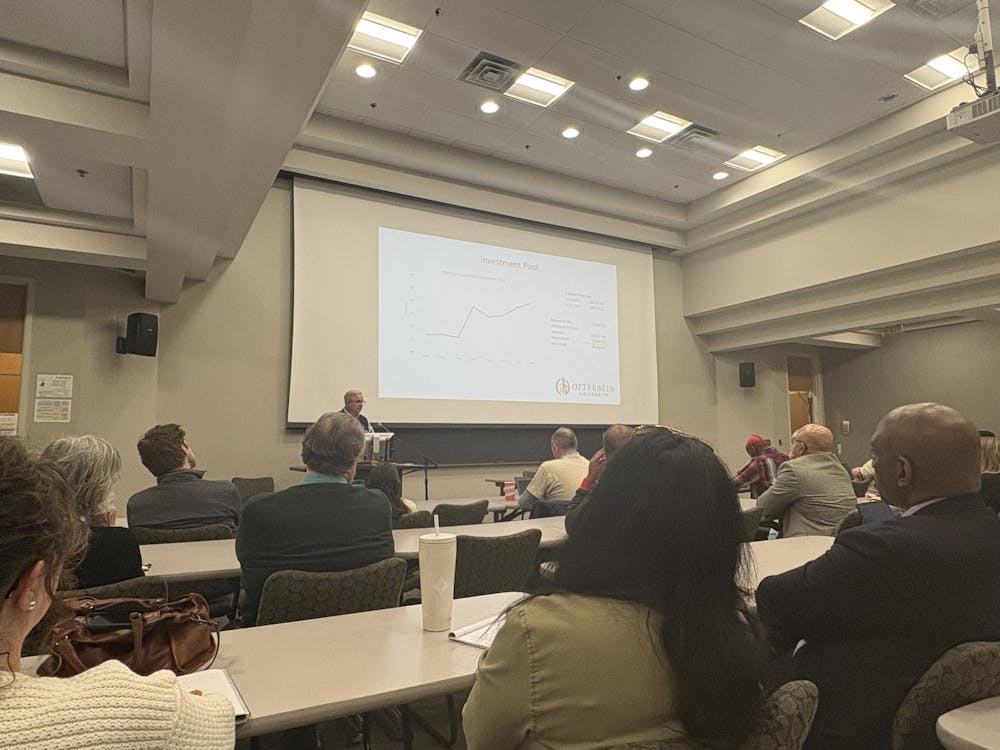
The university's financial outlook was presented during the Governance Town Hall meeting on Thursday, March 20.
Fiscal year 2025 runs from Oct. 1, 2024 to Sept. 30, 2025. All projections, as explained by Nutter, are a forecast based on what the university has incurred as of March 4, 2025, including two years of previous history.
Tuition revenue
Revenue from undergraduate tuition was $4.3 million less than anticipated, which translates to about 125 fewer students than anticipated.
Otterbein enrolled 579 first-year students in the fall and only 537 by the spring, despite having budgeted for 600. Additionally, graduate tuition came to $2.2 million, which was $480,976 less than the budget. As graduate programs transition to Antioch University, a collaboration the university is still growing, and Nutter noted this gap was expected.
The deficit was increased by $3 million in unfunded aid that fell short of the goal.
Declines in persistence and retention
Retention and persistence rates also influenced the deficit. With a 3.7% increase in retention, Otterbein saw impressive advances in fiscal year 2023–24; however, this year saw a 2.6% decline in retention.
Spring tuition income was impacted by a decrease in fall-to-spring persistence from 95% to 92%. According to Nutter, budgeting was predicted based on last year's greater persistence, but this year's numbers fell between 3% to 4% short of expectations.
Managing and reducing expenses plans for fiscal year 2026
Although revenue is declining, Otterbein anticipates a $702,137 decrease in expenses, which will help offset part of the loss. However, expense only account for certain operating costs, such as tuition, fees and related charges. The projection excludes non-operating funds, such as endowment accounts, athletics and fundraising for student organizations.
“Most of the revenue is in. Revenue numbers won’t change by a whole lot by the end of the year, but our expenses can change, and we hope to make an improvement to see expenses go down and reduce the deficit,” Nutter said.
Looking ahead, the university plans to closely monitor available positions to identify which searches can wait until fiscal year 2026, limit purchases and permission limitations, and carefully regulate spending. Additionally, they intend to support operations by using donation accounts where appropriate.
“The university is in a strong, healthy position. I don’t want to send a message that we’re not doing so great in fiscal year [20]25—this just means we budgeted aggressively and didn’t meet those goals. We need to make adjustments,” Nutter said.
Good signs for fiscal year 2026
Nutter reported encouraging enrollment momentum in fiscal year 2026 despite challenges. With 400 students now committed for Fall 2025, new student deposits as of March are 30% higher than they were at the same time last year.
‘’We have seen an uptake of over 50 first-year students in fall of 2024, and we're anticipating to have even more students in fall of 2025 ... All indicators indicate we will have a strong class,’’ Nutter said.
Long-term financial health reflected in investments
Nutter noted the expansion of Otterbein's investment pool as proof of the university's long-term financial stability. As of December 2024, the pool has increased by a net $35 million from 2017, which is an indicator of good financial health.
Over the past three years the university has made a lot of investments:
- $3 million to the Coalition to the common good
- Putting over $11 million for phases one and two of the campus center
- Putting $1 million in the innovation fund
- Unexpected innovation of Mayne Hall flood costing about $330,000 of unplanned and budgeting expenses
“Despite these investments and some unexpected costs, the university still has a strong financial position," Nutter said. "Our debt compared to assets is low, and the university is healthy financially."
This story was updated Aug. 27th 2025