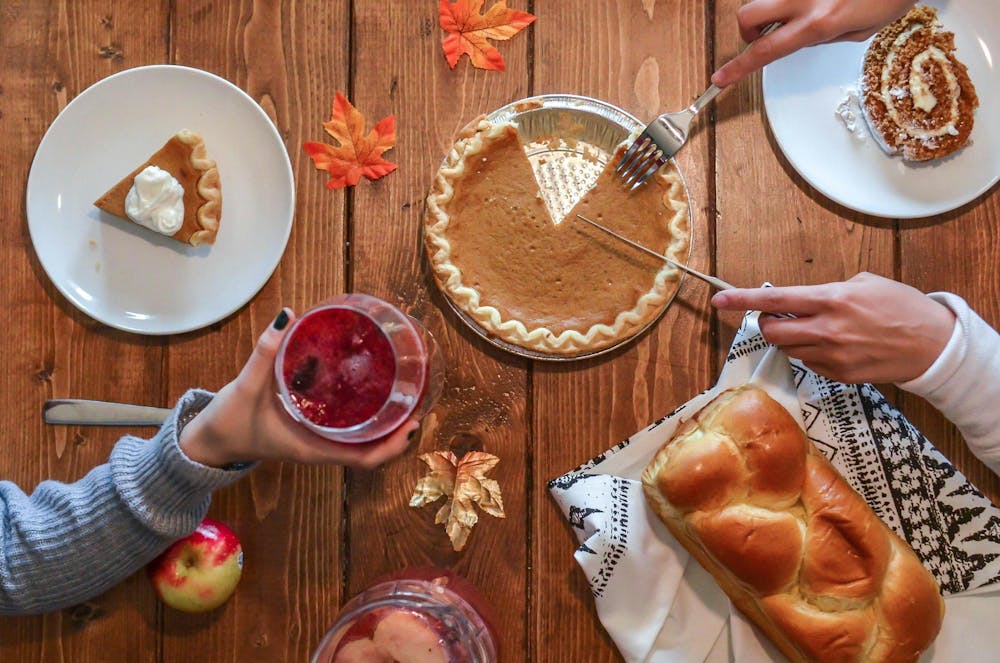
Let’s not overlook Thanksgiving.
With the end of October comes the end of spooky season, and afterward, people are eager to race towards Christmas and all of its gift-giving allure. The lights are up, the music is playing on repeat, and everyone is making their wish lists. However, in our eagerness to deck the halls, we forget to celebrate the holiday sandwiched between Halloween and Christmas: Thanksgiving.
All of our national holidays hold some measure of significance, and forgetting that can have harmful consequences on our culture. It’s important to maintain the cultural importance of our holidays and engage with them every year. That includes Thanksgiving. In many ways, it’s one of the most important holidays of the year. It allows us to reflect not only on our collective history, but also on how we’ve grown and changed.
Why do we overlook Thanksgiving?
Well, the reasons vary.
For one, the Christmas Creep is a real phenomenon, as is the American citizen’s fixation on materialism in the form of giving and receiving gifts. This makes the holiday season the busiest time of the year. Corporations are hungry to boost their sales, and consumers are more willing to make expensive purchases to please their families. As such, wish lists are made months in advance, and shopping begins much earlier in preparation to rock around the Christmas tree.
Halloween has candy, and Christmas has gifts. Unlike its cousins, Thanksgiving doesn’t have any equivalent consumerist appeal. Family reunions, quality dinners, and reminders of what to be thankful for, unfortunately, are not all that enticing to a capitalistic society.
Luckily, there are those who vouch for Thanksgiving’s significance. Given the countless struggles the average American endures daily, there’s value in taking time to be among beloved family members, eat good food, and remember what we’re thankful for. Doing so can alleviate some of our external stressors and remind us that nothing is as bad as it seems, and that we’re not alone.
In 2024, a quarter of our nation’s population was considering skipping Thanksgiving due to election-related stress. Fear of political division and arguments at the dinner table is genuine. Unproductive political debates are a headache — and for some families, they’re inevitable. To avoid this, Thanksgiving sadly has to be skipped. Also, the pandemic in 2020 caused people to think about skipping the holiday. People across the country avoided Thanksgiving gatherings out of fear for their elderly relatives’ health.
A historical look
November is Native American Heritage Month, so it’s important to understand what the holiday represents to the Native American community.
For people of Native descent, the controversial history of the holiday is reason enough to skip it. Many Native Americans refuse to celebrate the holiday due to the false narrative of the Wampanoag People welcoming the English settlers from the Mayflower into their land in the 1620s and having a three-day feast in their honor.
Of course, this whitewashed version of the actual tale is a source of resentment for the holiday. It erases the atrocities that were committed against Natives during and after the event. Today, many of those same atrocities are reproduced and committed with impunity. However, there are still plenty of Native Americans who are pushing for new and reformative views on Thanksgiving. Despite its history and the harmful stereotypes and cultural appropriation it perpetuates today, Native Americans are reclaiming the holiday so they can spend time with their families.
They’re striking a balance between remembering the past and creating a new future. They are honoring the contributions their ancestors made to American history and giving the holiday a new cultural importance. The lesson the rest of us can learn is that we should honor both our families and American Indian and Alaska Native Heritage Month. Their history is American history, and there’s no harm in giving respect to their culture and accomplishments.
Remember to give thanks
Thanksgiving is a time for listening, for healing, and for reflection. Ignoring it not only means ignoring a national holiday, but also a crucial part of our collective history. Being mindful of how the holiday originated and what it means to us now is a big step forward in our growth as a society.
Instead of overlooking Thanksgiving, we should reconsider our relationship to it and come up with new ways to celebrate it while honoring Native Americans. In addition to giving thanks to our families and in our personal lives, we should also uplift our Native peers and their values. In our commitment to upholding racial and ethnic justice, we should strive to be supportive, appreciative, and give back to others.
Most importantly, we should give thanks to the little things, because they’re easy to forget. Give thanks to the last meal you were able to eat, because not many people can. Give thanks to the fact that you’re still able to wake up every morning and face the day. Give thanks to yourself for being yourself. Thanksgiving is the time to do all of these things. Our time on Earth is short enough as it is, so taking the time to be thankful and reflective can’t hurt one bit.
Also, it’d be a good idea to start celebrating the Friday after Thanksgiving as Native American Heritage Day rather than Black Friday.
Editor's Note: Dalton Mosley graduated in May 2025. We are thankful we found this story in our archive.