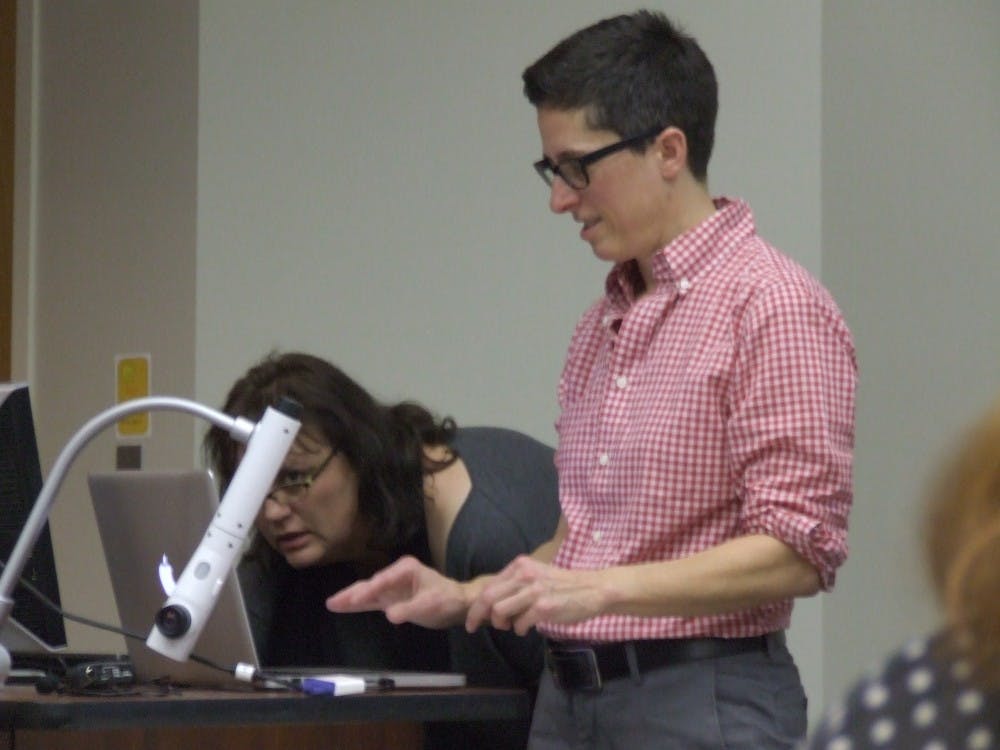
A person with short, dark hair and gray-fitted slacks came through the door, and immediately the crowd recognized that she was Alison Bechdel. This recognition was most likely because the majority of the students in the packed room had her two novels, where a picture of her is located on the inside jacket. With thick-rimmed glasses and a button-down shirt, she welcomed everyone and began to share her story in a feminine, graceful voice with a barely noticeable lisp.
Otterbein welcomed cartoonist Bechdel to the Otterbein Artists series, co-hosted by the English Department on Tuesday. Bechdel is best known for her comic strip “Dykes to Watch Out For,” which portrayed lesbians in pop culture, that she wrote 1987 to 2008. The strip came to a halt when Bechdel decided to put it on a hiatus to finish her first novel, “Love Life,” which led to the development of other books and memoirs. Bechdel is now growing in popularity due to the reality, and somewhat harsh nature, of her memories and relationships with her parents as she grew up in Pennsylvania.
From a young age, Bechdel was interested in cartoons and comics she found in old books of her parents’ home. This included a comic about the Addams Family, but she said she couldn’t quite make sense of it when she had read it at such a young age.
Words weren’t necessary for Bechdel to feel emotion or understand the vibe a character was portraying. Bechdel knew early on that she could relate pictures of someone to what they’re saying just as well as she could when there were words.
Bechdel grew up with Obsessive Compulsive Disorder, but insisted upon writing her day-to-day activities in a dated book. The text included everything she did that day, but eventually she started guarding her words and couldn’t write them herself, so her mother took over. Each night, her mother would sit down and write in her journal as Bechdel told her what to write.
“The combination of words and pictures is something I love,”Bechdel said. “I grew up in an old, antique-filled house that was very much like the world Addam’s was drawing.”
After she finished college, as an art major striving to be a cartoonist, Bechdel applied to graduate school programs but failed to get accepted to any of them. She soon made the decision to start writing and illustrating comics.
The artist struggled to find what words would represent the emotions she was feeling. She often had to stop writing and go back to drawing when she felt overwhelmed or held back by words. She said she gets inspiration for words from the exact emotions and faces she remembers from her past.
“Words aren’t always necessary,” Bechdel said.
Bechdel’s first memoir, “Fun Home,” was published in 2006 based around the memories she had before and after her father’s death with the responsibility she felt toward writing his story and telling the truth about him.
“I also grew up in a house with lots of secrets,” she said.
“Fun Home” stayed on the best-seller list for two weeks. But this memoir holds the true telling’s of what it was like to grow up with a mentally troubled father, who felt trapped in a home. Bechdel found out later in life that her father actually had multiple affairs with young men including some of his high school students.
After finding out about her father’s sexuality and affairs, Bechdel eventually knew she was ready to come out to her family and thought it would be a fairly easy, understood process. But to this day, Bechdel feels a sense of responsibility when it comes to her father’s death, which may or may not have been a suicide that happened months after she came out.
Ensuing the popularity of her first book, Bechdel made the decision to write a second memoir focusing on her mother and their relationship from when Bechdel was growing up through the present.
Bechdel said she didn’t grow up with who most would call nurturing parents. She said she often felt that the relationship between she and her mother was more like she was the parent and her mother was the child.
Bechdel faced many emotions as a child and was forced as a college-aged student to react to those emotions and face the questions that she wanted answers to. Through her books, Bechdel challenges the reader to think about the effects of our parents, positive and negative. What they taught us, how we learn by them and how we react to these circumstances is something we have to face.
Bechdel was someone to step up and say that it’s okay to not appreciate what your parents made you and to be you, no matter who that is.

The holidays aren't so happy

Do Christmas on a budget this year