
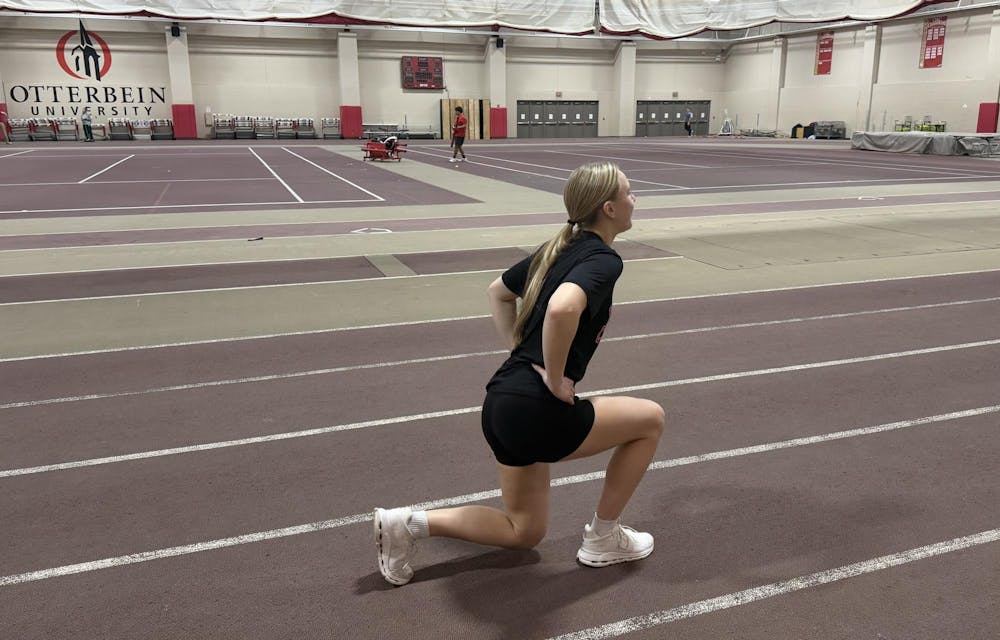
While anyone can injure their anterior cruciate ligament (ACL), studies have shown that women are two to eight times more likely than men to experience this injury.
The science behind the way surgeons do ACL surgeries has evolved significantly over the years, but that still does not answer the question of why it happens so often – not only to athletes, but also to people doing everyday activities.
In Michigan, senior Kayla Lechnir started the volleyball game against Hope College like she did many others. What she didn’t prepare for was when, stepping backwards and trying to push off, Lechnir heard a pop in her knee. This pop ended up being a torn ACL and meniscus, and she had to use her patellar tendon to replace the torn ACL.
Lechnir is a senior psychology major and an outside hitter on the Otterbein volleyball team. In September 2024, after hearing a pop in her knee, this led to her missing out on her junior season and the first half of her senior season. The average time most athletes can return to sports after ACL reconstruction is between eight months to a year. Recovery time varies for each person and depends on which graft was used to replace the ACL.
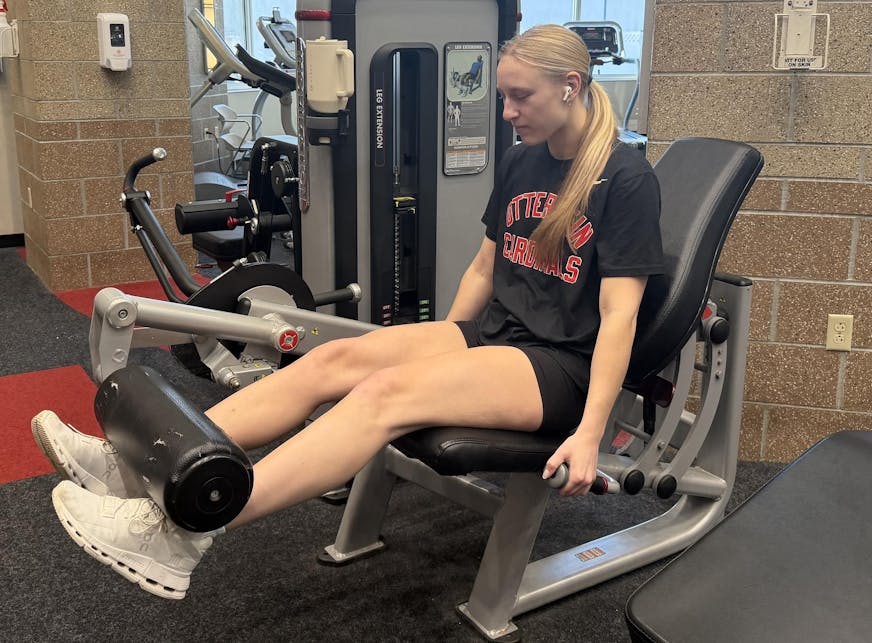
Kayla Lechnir, senior volleyball player strengthening her quads post ACL surgery.
The mental side of ACL reconstruction surgery
Such a small ligament in the knee can make a big impact on athletes. “It was so hard depending on other people to help me do things that were automatic and easy,” said Lechnir. “I had to have help showering, getting dressed, and going to class.”
ACL reconstruction surgery is not only hard physically, but can be hard mentally as well. “It really took a huge toll on my mental health not being able to contribute to my team as well,” said Lechnir. “I felt like a bump on a log and just like I was taking up space.”
In a study by Clinical Advisor, 42% of patients with ACL reconstruction surgery were found to meet the criteria for major depressive disorder. The isolation the injury causes can increase mood disturbances and depression.
Many college athletes have noted that the mental side of recovery is harder than the physical side. “The mental side of recovery was way harder,” said Lechnir. “It took so much mental strength to go to PT every day, knowing that I would not be able to do the things I once did with ease.”
Lechnir said that she saw a sports psychologist during the fourth and fifth months of recovery to help with the process and get out of a hole she felt stuck in. Celebrating the wins was important for Lechnir throughout this process.
“Walking became a huge milestone, as did running and eventually jumping.” She said that she knows more women athletes on Otterbein’s campus who have torn their ACLs than men.
Jake Sherer is an athletic trainer who has been working with Otterbein for five years. When it comes to the ACL tear rates at Otterbein, Sherer said the studies show that the overall ACL tear rate is higher for women than men.
“At Otterbein, we have a fairly even split,” said Sherer. “Although it's worth noting we have men's teams that carry larger rosters than women's sports here, such as football and men's lacrosse. The ratio of female to male athletes is not 1-to-1, making it a higher exposure rate for men.”
Women are statistically more likely to tear their ACL
Around 150,000 ACL injuries occur in the United States each year. Most of the time, these injuries occur in a non-contact fashion.
For example, this can include changing directions to dodge a defender or jumping up and landing weirdly. The sudden force from a twist or landing can cause this ligament to tear. John Hopkins Medicine conducted a Q&A with surgeon Andrew John Cosarea. He said the structure of the knee joint puts women at a much higher risk for an ACL tear.
Women’s joints tend to have more flexibility and more range of motion than men’s joints. Women also tend to have less muscle mass around the knee, which causes more instability and can lead to a ligament tear if it gets too stretched. It also comes down to the difference in sports technique between men and women. Women tend to move their knees slightly more inward and not bend them enough when coming down from a jump.
Sherer also noted the contribution that the biology of women has on ACL tear rates. “Women have a wider pelvis and have a larger Q angle; this contributes to women having more natural knee valgus positions,” said Sherer.
Women's ligaments also naturally come with more flexibility. “Women also tend to have more laxity in their ligament than men do, as well making them more susceptible to ACL tears. There are also hormonal effects. Women have higher estrogen levels, which contribute to ligament laxity,” said Sherer.
Northwestern Medicine came to the same conclusion in their study. The alignment of the hips alters the knee joint, increasing the risk of injury during movements like jumping, cutting, and landing. When women land, they usually tend to do so with straighter knees and less engagement of the core. Men usually bend their knees more when landing from a jump.
All of these factors indicate that female athletes are two to eight times more likely to suffer from an ACL injury. Once an individual has had one ACL injury, they are also six times more likely to injure it again.
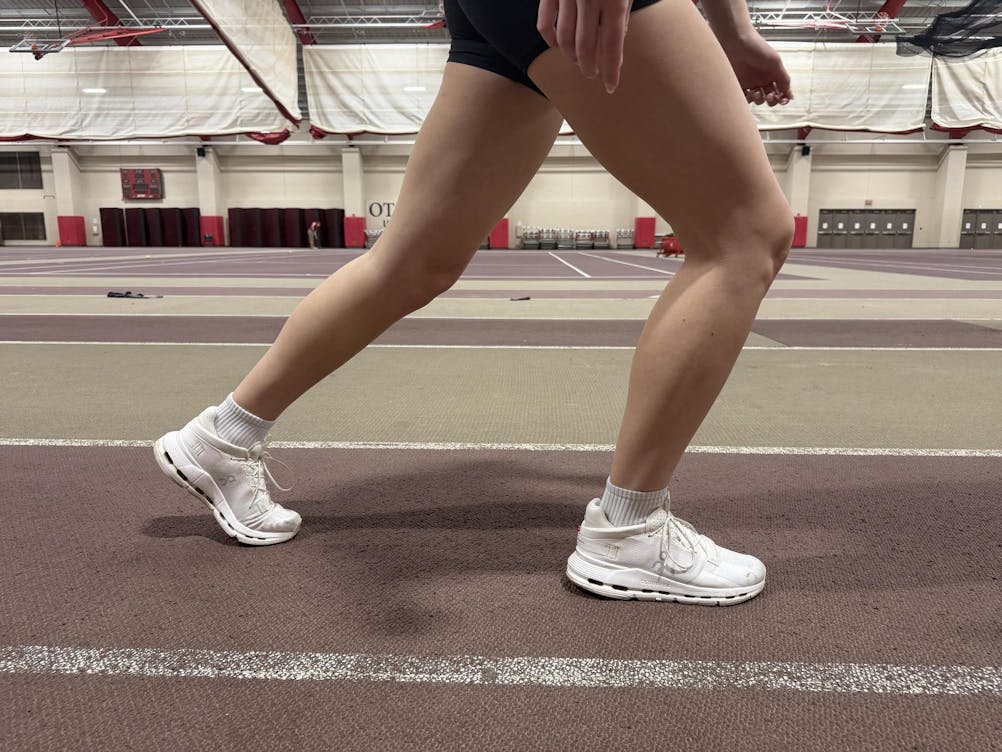
Kayla Lechnir, senior volleyball player, warming up before doing rehab.
Can you prevent ACL tears?
Although ACL injuries cannot be 100% prevented, there are ways to decrease one’s chances of getting this injury. This can include working on a good technique for landing from a jump. Some other ways to decrease the chances of an ACL tear are to warm up before playing, avoid working out while tired, and train consistently.
The most talked about method is strength training. Building all parts of the leg muscles and core can help protect the ligament and decrease the chances of an ACL tear. Strong legs, hips, and core can help with balance and stabilization when playing.
Changing the mindset after ACL reconstruction surgery
Plenty of athletes develop a changed mindset, not only during their recovery, but also after their recovery when getting back into sports. For most athletes, it allows them to better appreciate being healthy.
“I will never take walking, running, and being able to work out for granted ever again,” said Lechnir. Although men and women are at risk of having this injury, it is hard to know that women are biologically more likely to have this injury.
“Having those things ripped from me in an instant was terrible, and I do not wish it on my worst enemy,” Lechnir said. After this long process, she developed a positive mindset. “It has also taught me that I am full of strength, endurance, and that I can do anything I put my mind to,” said Lechnir. After getting a patellar tendon graft to replace her ACL, she was cleared to play volleyball again at Otterbein after a year, with no restrictions to finish out her senior year.

Letter from the editor

Meet the 2026 magazine staff


Y26 fashion trends for a new era


